After two decades of getting Central Florida families home from jail, I can tell you the phone call always sounds the same. It’s 2 AM. Someone’s loved one has been arrested for dating violence. They want to know how fast we can get them out.
Here’s what catches families off guard: dating violence cases don’t work like other arrests in Florida. You cannot bond out immediately. The law requires a mandatory first appearance before a judge, which means your loved one stays in custody under a no bond until first appearance. Understanding this timeline makes a stressful situation manageable instead of shocking.
This guide explains how bail actually works for dating violence charges, the critical differences from domestic violence cases, what happens during the first appearance hearing, and how to prepare for the bail bond process.
What Is Dating Violence Under Florida Law?
Florida Statute 784.046 defines dating violence as violence between individuals who have or had a continuing and significant relationship of romantic or intimate nature. The statute sounds legalistic, but courts apply three concrete factors to determine if your relationship qualifies.
- First, the dating relationship must have existed within the past six months. A relationship that ended two years ago doesn’t count.
- Second, the relationship must have been characterized by expectation of affection or sexual involvement between the parties.
- Third, the frequency and type of interaction matters. Courts look for evidence that persons involved over time on a continuous basis during the course of the relationship.
Let’s be clear: casual acquaintances don’t qualify. The law specifically excludes “violence in a casual acquaintanceship or violence between individuals who only have engaged in ordinary fraternization in a business or social context.” You went on two Tinder dates? That’s not dating violence under Florida law. You dated someone exclusively for four months with regular overnight stays? That qualifies.
Common charges filed under dating violence include battery, assault, stalking, and violation of injunction for protection. Battery and assault are considered violent crimes under Florida law. The volume of these cases means prosecutors and judges in Lake County handle them with specific protocols that directly affect how bail works.
Key Elements That Define a Dating Relationship
Courts examine these relationship factors closely:
- Relationship duration and recency: Six-month window from the alleged incident backward
- Nature of emotional or physical intimacy: Romantic expectations, not friendship
- Frequency and type of interactions: Regular, ongoing contact patterns
- Evidence of ongoing connection: Text messages, social media, witness statements about the relationship
Prosecutors use cell phone records, social media evidence, and witness testimony to establish these elements. The relationship determination happens before your first appearance, which affects how the judge approaches bail conditions.
How Does Dating Violence Differ from Domestic Violence?
I see many arrests from Umatilla to Clermont and throughout Lake County, and this question creates massive confusion. Families assume “domestic violence” and “dating violence” are interchangeable terms. They’re not.
Florida Statute 741.28 defines domestic violence as any assault, battery, sexual assault, stalking, or criminal offense resulting in physical injury of one family or household member by another family or household member. The critical distinction: “family or household member” means spouses, former spouses, persons related by blood or marriage, persons presently residing together as if a family, or persons who are parents of a child in common.
Dating violence applies to romantic partners who may never have lived together. Domestic violence covers family members, spouses, and people who share a household. Learn more about how we handle domestic violence bail bonds in Central Florida. Here’s the comparison that matters for bail purposes:
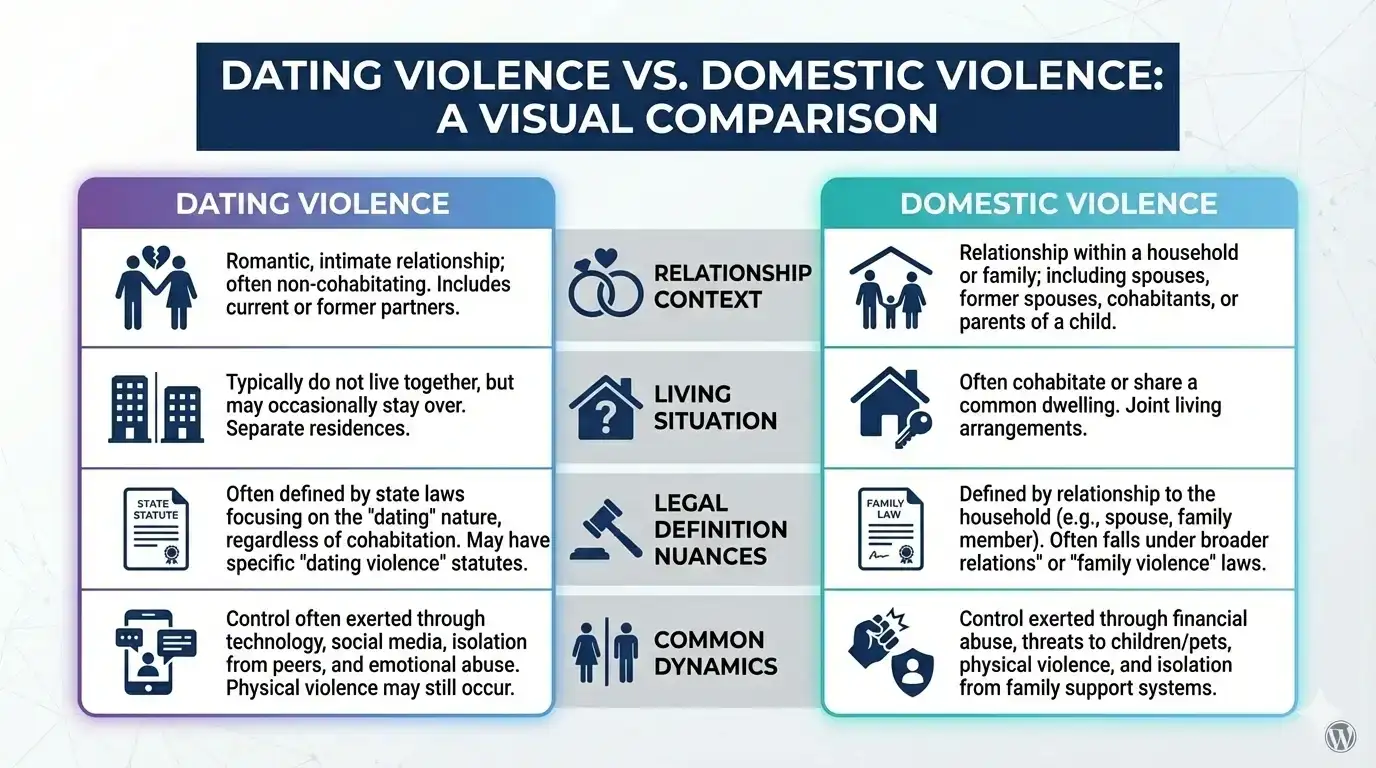
The legal distinction affects which statute prosecutors cite, but here’s what families actually need to know: both classifications require identical bail procedures. You face the same mandatory no bond until first appearance. You get the same first appearance hearing. The judge applies the same factors when setting bail and conditions.
Why the Legal Distinction Matters
The relationship type determines available legal protections. Dating violence cases allow for dating violence injunctions, while domestic violence cases use domestic violence injunctions. The statutory language differs, but the practical effect (court-ordered no contact with specific conditions) works similarly.
Prosecutors sometimes charge cases under both statutes depending on relationship evolution. A couple who dated for three months, moved in together briefly, then separated might qualify under both definitions. The charging decision affects potential penalties but doesn’t change the first appearance requirement.
Why Can’t You Bail Out Immediately for Dating Violence?
Every county jail in Florida operates under the same rule for dating violence arrests: no bond until a judge reviews your case. Standard arrests for theft, drug possession, or DUI usually follow a preset bond schedule. Someone arrested Friday night for shoplifting can often bond out within hours using the schedule amount.
Dating violence doesn’t work that way. Florida law mandates a first appearance hearing for all domestic and dating violence arrests. These first appearance procedures changed in recent years to enhance victim safety. The judge must personally review case circumstances before setting bail. This requirement exists for victim safety reasons and flight risk assessment; it creates a time period that the defendant is separated from the victim that families must plan around.
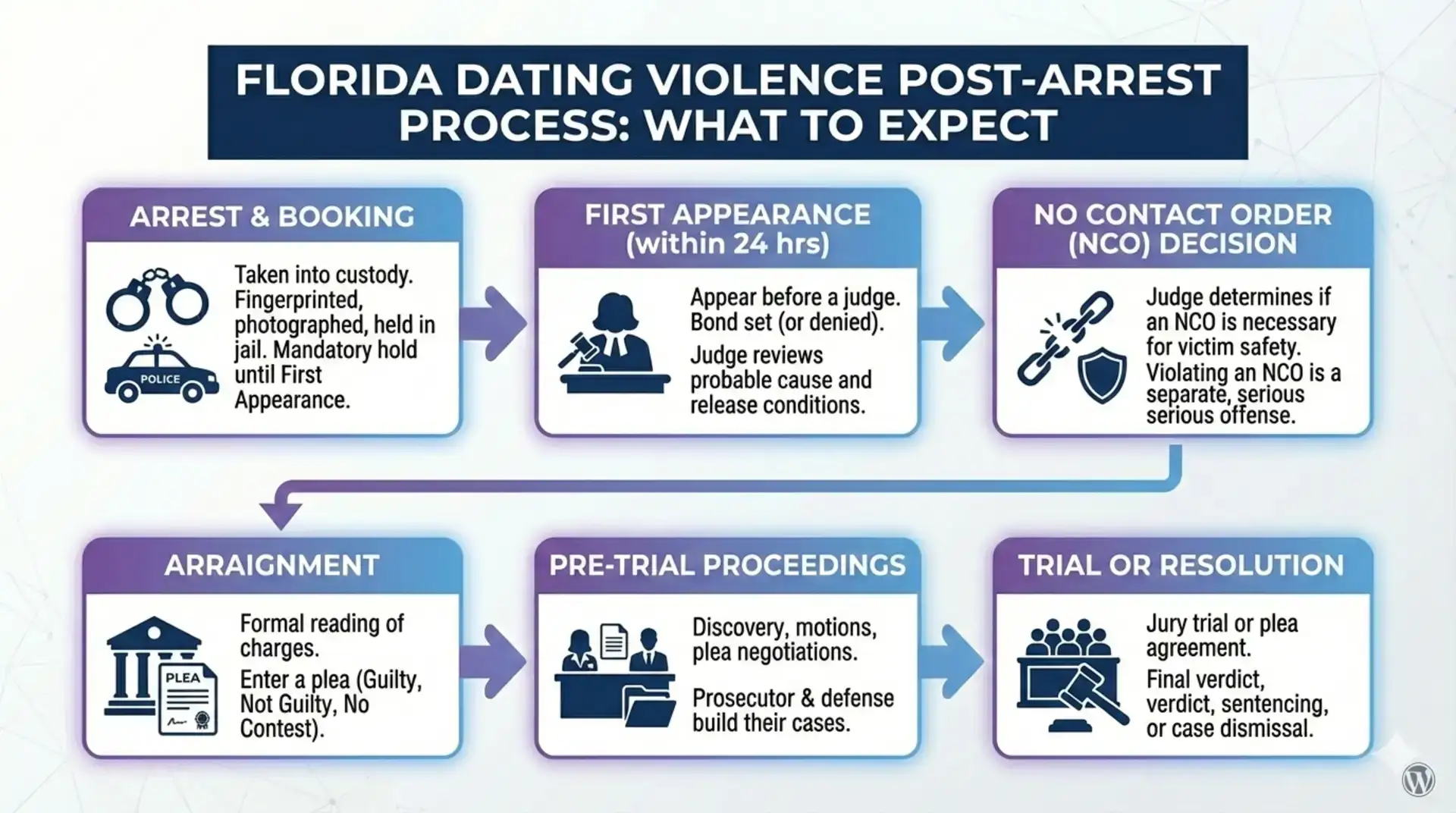
First appearance hearings in Lake County must occur within 24 hours of arrest, often conducted via video conference from the detention center. I’ve watched thousands of these hearings. The judge advises defendants of charges, determines whether probable cause exists for the arrest, and makes critical decisions about pretrial release conditions.
Here’s what the judge considers when setting bail:
- Nature of allegations and severity of injuries
- Defendant’s criminal history, especially prior domestic or dating violence cases
- Ties to the community (employment, residence, family)
- Potential threat to alleged victim
- Flight risk based on available information
John got arrested Friday night for dating violence battery after an argument with his girlfriend turned physical. His family called four different bail bondsmen expecting immediate release. They all gave the same answer: he stays in custody until his Saturday morning first appearance. Understanding this mandatory waiting period helped his family stop panicking and start preparing properly. They gathered collateral information, arranged payment for the bond premium, and had everything ready the moment the judge set bail.
What Happens at the First Appearance Hearing
The hearing moves fast, usually 5 minutes maximum per defendant. The defendant appears before the judge via video or in person. The judge reviews the arrest affidavit and circumstances. Prosecutors may present objections to bond based on victim statements or defendant’s record. The judge then sets bail amount and conditions, almost always including a no contact order prohibiting any communication with the alleged victim.
Defendants facing misdemeanor charges may have the chance to enter a plea at first appearance if they choose. Felony defendants don’t enter pleas at this stage. The case gets scheduled for an arraignment hearing where the case starts its pretrial proceedings.
How Much Is Bail for Dating Violence Charges in Florida?
No preset bond schedule exists for dating violence cases. The judge has complete discretion. I’ve seen bail set at $1,000 for minor battery with no injuries and no prior record. I’ve also seen $100,000 bail for aggravated battery with serious injuries and prior convictions.
Factors that increase bail amounts include weapons involvement, serious injuries requiring medical treatment, violation of an existing injunction, and prior domestic or dating violence history. Judges also consider whether the defendant made threats, whether children witnessed the incident, and whether the alleged victim expresses fear. More information on Bail Bonds Financing.
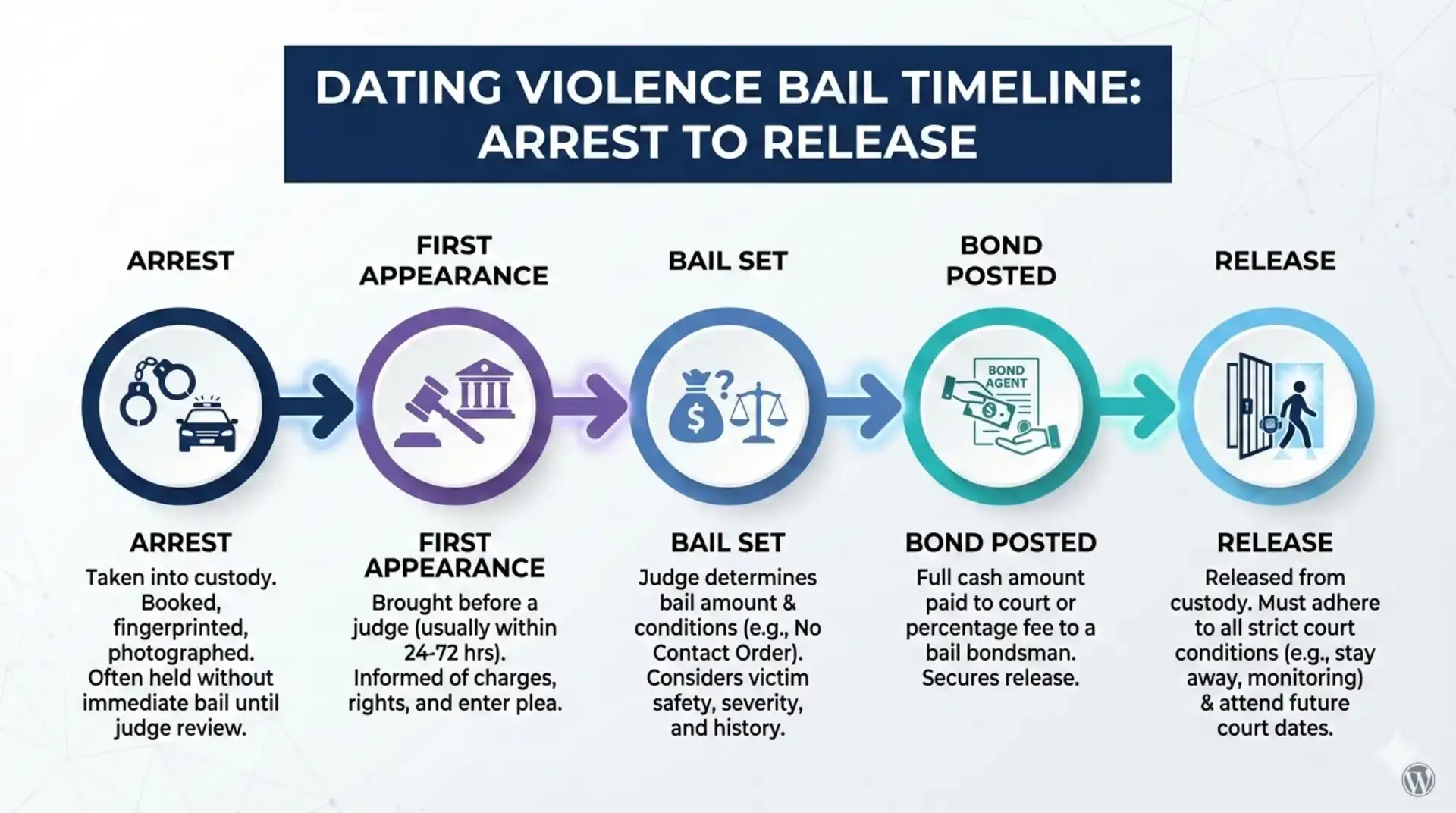
Court costs and fees run separate from bail amounts. Bond premiums in Florida cost 10% of the total bail amount. This fee is non-refundable. It pays for the surety bond service and remains with the bondsman whether charges get dismissed, reduced, or result in conviction. We offer payment plans and financing options to make this unexpected expense affordable.
Higher bail amounts or defendants with flight risk factors sometimes require collateral (like property deeds, vehicle titles, or other assets) to secure the full bond value. If the defendant appears at all court dates and meets all conditions, collateral gets returned after case resolution regardless of verdict. Many clients do qualify for no collateral bail bonds depending on case circumstances.
Additional Release Conditions You Should Expect
Judges impose conditions beyond bail amounts. Plan for these requirements:
- No contact with alleged victim: No direct or indirect communication, including through third parties, social media, or “accidental” encounters
- GPS ankle monitoring: Common in Lake County and other Central Florida jurisdictions for dating violence cases
- Surrender of firearms: Immediate requirement if any weapons exist in defendant’s possession
- Travel restrictions: May be confined to specific counties or required to surrender passport
- Alcohol or drug testing: Regular screenings if substances played a role in the incident
- Check-in requirements: Weekly or bi-weekly reporting to pretrial services
GPS monitoring costs typically run $10 to $15 per day, paid by the defendant. This adds up fast over weeks or months while the case proceeds. Home detention systems are even more restrictive, confining defendants to specific locations with alerts triggered by unauthorized movement.
Can You Bail Out of Jail for Dating Violence?
Yes, but as mentioned, only after the judge formally sets bail. Families who understand this sequence stop asking why immediate release isn’t possible and use that mandatory 24-hour waiting period to prepare. By using our bail by phone service, you can complete the required paperwork and arrange payment ahead of time.
Once the judge strikes the gavel, we post the bond immediately so the jail’s release countdown can begin. Release timelines depend heavily on jail processing efficiency. Lake County typically processes releases faster than larger facilities in Orange, Marion or Seminole counties, but expect 2 to 4 hours from the moment the bond is posted to actual release. Weekend arrests can create longer waits because administrative staff runs leaner.
If your loved one has been arrested for dating violence, contact Altman Bail Bonds at 352-343-6090. We’re available 24/7 and can have everything ready the moment the judge sets bail. Our office at 801 W Main St in Tavares serves all Central Florida counties with direct courthouse experience that makes the difference between waiting around confused and getting your family member home fast.
What to Prepare Before Contacting a Bail Bondsman
Having this information ready speeds up the process:
- Defendant’s full legal name and date of birth
- Jail location and booking number (check Lake County Clerk website)
- Expected first appearance date and time
- Collateral documentation if applicable (property deeds, vehicle titles)
- Payment method for premium (cash, credit card, payment plan options available)
- Emergency contact information for defendant and co-signer
What Happens After Release on Bail for Dating Violence?
Strict compliance with the no contact order is mandatory. This condition trips up more defendants than any other. The alleged victim calls or texts to apologize or reconcile. The defendant responds. Bond gets revoked. New charges get filed. Bail increases dramatically for the second arrest.
Let me make this clear: no contact means absolutely no contact. Not through text. Not through social media. Not through mutual friends or family members. Not even if the alleged victim initiates contact and begs for communication. Responding to a single message can result in immediate arrest, bond revocation, and potential charges for violating a no contact order.
Sarah bonded out after her first appearance with $5,000 bail. She received a text from her ex-boyfriend two days later apologizing for the incident. She responded with “thank you, I appreciate that.” That single text message led to bond revocation, re-arrest, and a new bail amount of $15,000 with stricter GPS monitoring conditions. The prosecutor used the text as evidence of contact violation at her bond revocation hearing.
Court dates must be attended without exception. Failure to appear results in bond forfeiture, arrest warrant issuance, and additional charges for failure to appear. Review our bail bonds FAQs for more information about court appearance requirements. GPS monitoring compliance requires keeping the device charged and functioning properly at all times. Dead batteries, tampering, or removing the device all constitute violations that trigger immediate arrest.
Pretrial services check-ins happen weekly or bi-weekly depending on court orders. Missing check-ins, failing drug tests, or any new arrest leads to bond revocation. Criminal defense attorney consultation should happen immediately after release to begin building defense strategy and understanding potential outcomes.
Common Mistakes That Lead to Bond Revocation
These violations send defendants back to jail:
- Responding to alleged victim’s contact attempts, even friendly messages
- Returning to shared residence or showing up at victim’s workplace
- Third-party contact through friends, family, or social media
- Social media interactions including likes, comments, or profile views
- Attending same locations, events, or establishments where victim might be present
- Alcohol consumption if prohibited as release condition
- Missing scheduled court appearances or pretrial service check-ins
Judges show minimal tolerance for condition violations in dating violence cases. The presumption shifts from “defendant deserves release” to “defendant cannot follow simple rules and presents danger.”
Dating Violence vs. Domestic Violence: Key Differences
The comparison matters for families trying to understand the process. Here’s what you need to know:
| Feature | Dating Violence | Domestic Violence |
|---|---|---|
| Relationship Type | Romantic, intimate relationship; often non-cohabitating. Includes current or former partners. | Relationship within a household or family; including spouses, former spouses, cohabitants, or parents of a child in common. |
| Living Situation | Typically do not live together, but may occasionally stay over. Separate residences. | Often cohabitate or share a common dwelling. Joint living arrangements. |
| Legal Definition | Defined by state laws focusing on the “dating” nature, regardless of cohabitation. May have specific “dating violence” statutes. | Defined by relationship to the household (e.g., spouse, family member). Often falls under broader “relations” or “family violence” laws. |
| First Appearance Required | Yes, mandatory within 24 hours | Yes, mandatory within 24 hours |
| Bail Procedures | Identical – judge reviews case, sets bail and conditions | Identical – judge reviews case, sets bail and conditions |
| No Contact Order | Almost always imposed as release condition | Almost always imposed as release condition |
Frequently Asked Questions: Dating Violence Bail in Florida
Do you have to see a judge for dating violence charges?
Yes, Florida law requires a mandatory first appearance before a judge for all dating violence arrests. You cannot bond out using a preset bail schedule. The judge must personally review your case and set bail conditions, which typically happens within 24 hours of arrest. This requirement exists for victim safety assessment and flight risk evaluation.
What is the difference between dating violence and domestic violence in Florida?
Dating violence involves romantic or intimate partners who may not live together, while domestic violence applies to family members, spouses, or people who share a household. Both require the same mandatory first appearance process, and bail procedures are identical. The legal distinction affects which statute applies but not how bail works or the conditions judges impose.
How long before bail is set for dating violence?
Bail is typically set within 24 hours of arrest during the first appearance hearing. Florida courts must hold this hearing quickly. Once the judge sets bail, a bondsman can post bond immediately, and release usually occurs 2 to 6 hours later depending on jail processing times. Weekend arrests may take slightly longer due to court scheduling.
Can you get out of jail immediately for dating violence?
No, you cannot get out of jail immediately for dating violence charges. Florida law mandates a first appearance before a judge who sets bail and release conditions. This creates a minimum 24-hour hold period before bond can be posted. Standard preset bond schedules don’t apply to dating violence cases.
What qualifies as dating violence under Florida law?
Florida Statute 784.046 defines dating violence as violence between individuals who have or had a continuing and significant romantic or intimate relationship. The relationship must have existed within the past six months, involved expectations of affection or sexual involvement, and included frequent, continuous interaction over time. Casual dating or one-time encounters do not qualify under the statute.
What if the alleged victim contacts me after I’m released on bail?
Do not respond under any circumstances. Even if the alleged victim initiates contact, responding violates your no contact order and can result in immediate re-arrest, bond revocation, and new charges. Save any messages as evidence that you did not initiate contact, but do not reply. Contact your attorney immediately to document the situation.
Can bail be denied for dating violence charges?
In rare cases, yes. A judge may deny bail if the defendant poses a significant threat to the alleged victim, has a history of violating protective orders, or presents extreme flight risk. Most dating violence defendants receive bail with strict conditions including GPS monitoring and no contact orders.
Dating violence charges in Florida create a bail situation that requires patience and proper preparation. The mandatory first appearance hearing means your loved one will spend at least 24 hours in custody before a judge sets bail. Understanding this timeline helps families plan appropriately instead of expecting immediate release that cannot happen.
Remember the critical distinction: while dating violence and domestic violence involve different relationship types, both follow identical bail procedures. The judge has complete discretion over bail amounts and conditions, making each case unique based on specific circumstances, defendant history, and alleged victim safety concerns.