


Knowing how to post a bail bond for someone in Lake County, Florida can feel overwhelming, especially when you are trying to help a family member or friend get released from jail. Florida accepts more than one type of bail, and the right option depends on the court’s order, the bond amount, and your circumstances.
This guide explains how to post a bail bond, including the differences between a cash bond and a surety bond. It also covers what may happen to your money, what a cosigner agrees to do, and when it makes sense to call a licensed bail bond agent.
Quick answer: A cash bond is paid in full directly to the jail. A surety bond is posted through a licensed bail bond agent for a premium, commonly 10% of the bond amount or a $100 minimum per charge. The court’s bond order determines which option is available.
How to Post a Bail Bond in Lake County, Florida
Before you post a bail bond, confirm the defendant’s full name, charges, bond amount, and any special conditions of release. You should also verify whether the judge ordered a cash-only bond. A cash-only requirement cannot be replaced with a surety bond unless the court changes the bond conditions.
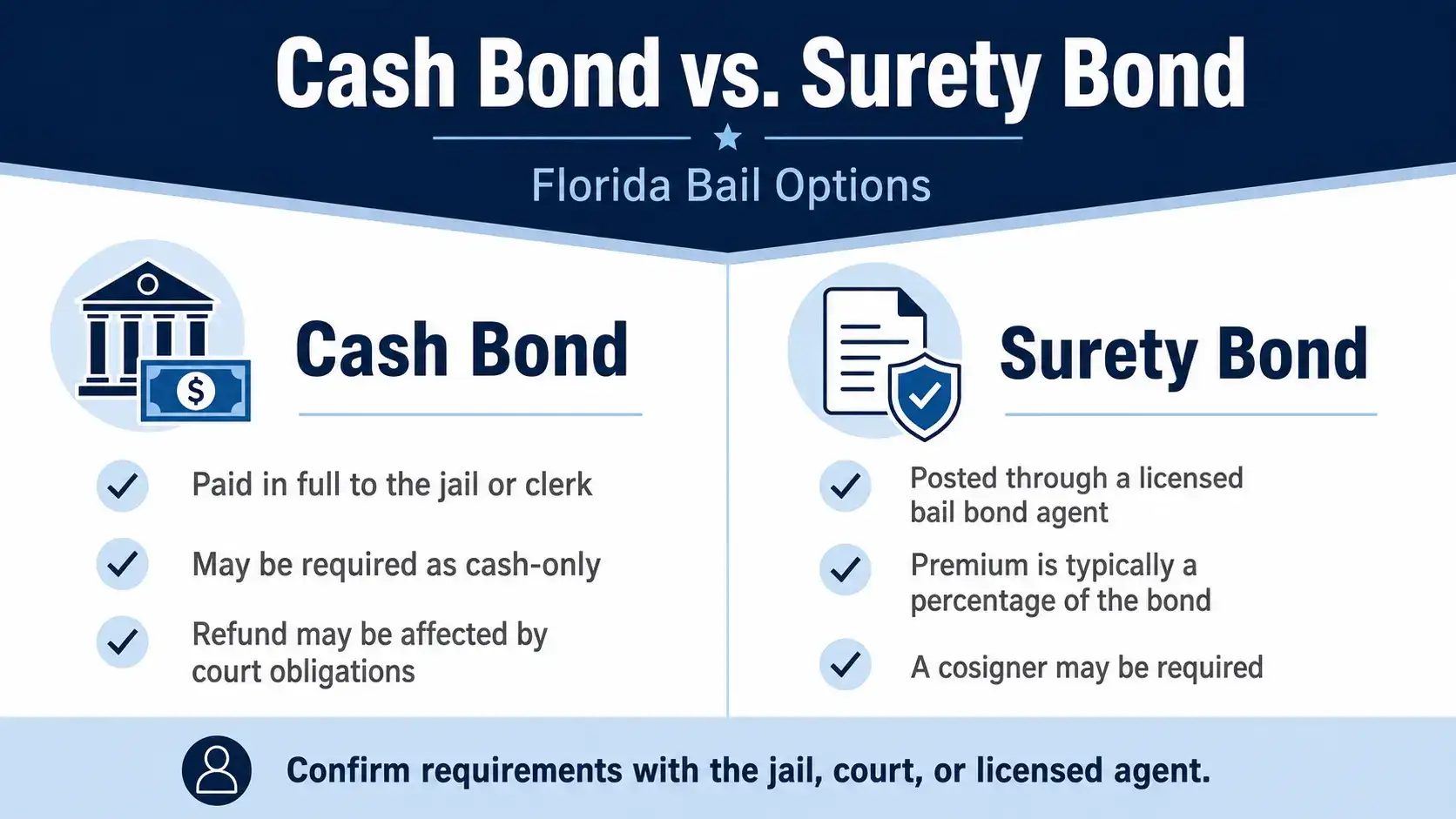
There are two common ways to post bail in Florida:
- Cash bond: The full bail amount is paid directly to the jail or clerk as required.
- Surety bond: A licensed bail bond agent posts the full bond through an insurance-backed agreement after the indemnitor or cosigner pays the required premium and signs the contract.
Cash Bond
A cash bond is paid directly to the jail in the full amount of bail ordered by the court. Cash bonds may be required for civil enforcement matters, including child-support purges and orders of commitment. A judge may also require cash only for certain charges or circumstances.
How Do I Post a Cash Bond?
For instructions on how to post a cash bond, call the jail holding the defendant or the appropriate clerk’s office. Lake County and Sumter County jail procedures can vary, so verify the accepted payment method, exact amount due, identification requirements, and hours before you go.
Generally, a jail will require cash in the exact amount of the cash bond or purge. You normally should not use a bail bond agent to post a cash bond because you, or another qualified person, can post the cash bond directly when a cash-only bond is required.
Can I Change My Mind After I Post a Cash Bond for Someone?
You may be able to have the defendant turn themselves in to jail before the defendant misses a court date. If the defendant is returned to jail, you will need to file the required paperwork with the court or clerk to request release of the cash bond.
Cash-bond return procedures take time. It can take several weeks for a refund check to be processed and mailed, and the amount returned may be affected by a forfeiture or by court-ordered withholdings for qualifying costs, fees, or penalties.
If I Post a Cash Bond, Will I Get My Money Back?
Maybe. If the defendant attends every required court appearance and the case is resolved, some of the cash bond may be returned to the person who posted it. However, a cash bond can be used to pay qualifying fines, fees, costs, and criminal penalties owed by the defendant.
Florida Statute 903.286 requires the clerk to withhold sufficient funds from a cash bond posted for a criminal defendant by someone other than a licensed bail bond agent to pay certain unpaid prosecution costs, representation costs, court fees, court costs, and criminal penalties.
In plain language, even when you posted the cash, the court may legally apply part or all of the available funds to qualifying financial obligations from the criminal case. Review the current language of Florida Statute 903.286 and speak with the clerk or an attorney if you need advice about a specific case.

What Happens If the Defendant Misses Court?
If the defendant fails to appear for a required court date, the judge can issue a warrant for the defendant’s arrest and the bond can be forfeited, sometimes called defaulted. If you posted a cash bond with the jail for the defendant, that money will most likely be lost.
Florida law generally provides that a failure to appear as required results in bond forfeiture. If the defendant appears on the required day, the court may have limited discretion to set aside a forfeiture in the interest of justice. Every case is different, so do not rely on a general article as legal advice.
Surety Bond
A surety bond, often called a bail bond, is the option many families use when they do not want to pay the entire bond amount in cash. When you use a licensed agent, the agent posts the required bond through a surety insurance company.
What Is a Bail Bondsman?
Bondsman, bondsperson, bail agent, and bail bond agent are common names for a person authorized to write surety bail bonds. In Florida, bail bond agents must be licensed and appointed through the Florida Department of Financial Services.
A bail bond agent acts on behalf of a surety insurance company. Before you sign a contract, ask to see the agent’s surety license and verify licensing information through the Florida Department of Financial Services licensee search.
What Is a Surety Bond?
A surety bond, or bail bond, is an agreement among the defendant, the person financially responsible for the bond, and a licensed bail bond agent.
The bail bond agent agrees to post the necessary bond so the defendant can be released from jail. The agreement is backed by an insurance company contract signed by the responsible person and the agent on behalf of the insurance company.
Only a person licensed and authorized under Florida law may post a surety bond. A surety bond is not the same as a cash-only bond. If the court requires cash only, call the jail or speak with legal counsel about the available options.
Why Would I Hire a Bail Bondsman?
If you do not have the cash to cover the full bond amount, you may wish to hire a bondsman to bond yourself or someone else out of jail. A surety bond can make it possible to secure release without tying up the entire cash bond amount.
As explained above, a cash bond may be used to pay qualifying court fines, fees, costs, and restitution-related obligations. If you are posting bail for someone and do not want to risk having all or part of your cash applied to those obligations, you may want to hire a bail bondsman instead.
How Much Does a Surety Bond Cost?
A surety bond commonly costs 10% of the bond amount or a minimum of $100 per charge.
You do not get the bail bond agent’s premium back because it is nonrefundable. Florida bail bond premium rates must be filed with and approved by the appropriate state office, so ask the agent for the exact premium, payment terms, and any other obligations before signing.
For example, a $5,000 bail bond generally costs $500 when you use a bail bondsman as a surety. If there are multiple charges or separate bonds, the total premium may be calculated separately for each charge or bond.
How Do I Post a Surety Bond?
Call Altman Bail Bonds: 352-343-6090
Altman Bail Bonds will do its best to explain the bail bond process and make the bond affordable. Tim Altman has been licensed in Florida since 1999 and has extensive experience with Lake County Detention Center procedures. Learn more about Tim Altman and Altman Bail Bonds.
To post a bail bond through an agent, be prepared to provide the defendant’s name, date of birth, booking information when available, charges, bond amount, and information about the person who will cosign. The defendant and a cosigner will be required to sign the bond agent’s contract.
If I’m a Cosigner, What Will I Have to Do?
If you cosign a surety bond, you are taking financial responsibility under the agreement. If the defendant misses a court date, you may be expected to help the bondsman find the defendant, pay the bondsman’s expenses for finding the defendant, or pay the full amount of the bond if the defendant cannot be found.
Read the indemnity agreement carefully before you sign. Ask questions about payment plans, collateral, the defendant’s court obligations, and what you must do if the defendant fails to appear.
If I Go Through a Bond Agent to Post a Surety Bond, Will I Get My Money and Collateral Back?
You will not get the surety bond premium, usually the 10%, back. The premium is the fee paid for the agent to post the bond.
Any collateral deposited may be returned after the bond obligation has been fully resolved and the bail bond agency’s contractual requirements have been met. The timing and conditions for collateral return should be clearly explained in your signed agreement.
Before signing contracts or promissory notes, read them carefully and make sure you understand them. Always get copies of every document you sign at the time you sign it. Ask to see your bail bond agent’s surety license.
Need Help Posting a Bail Bond?
This information provides basic guidance only. Every case is different, and some cases are complicated. Bond conditions, cash-only requirements, release timing, payment methods, and court procedures can change based on the judge’s order and the facts of the case.
If you need more information about how to post a bail bond or need bail bond assistance in Lake County, please contact bail bond agent Tim Altman at Altman Bail Bonds. We are available 24 hours a day, 7 days a week.