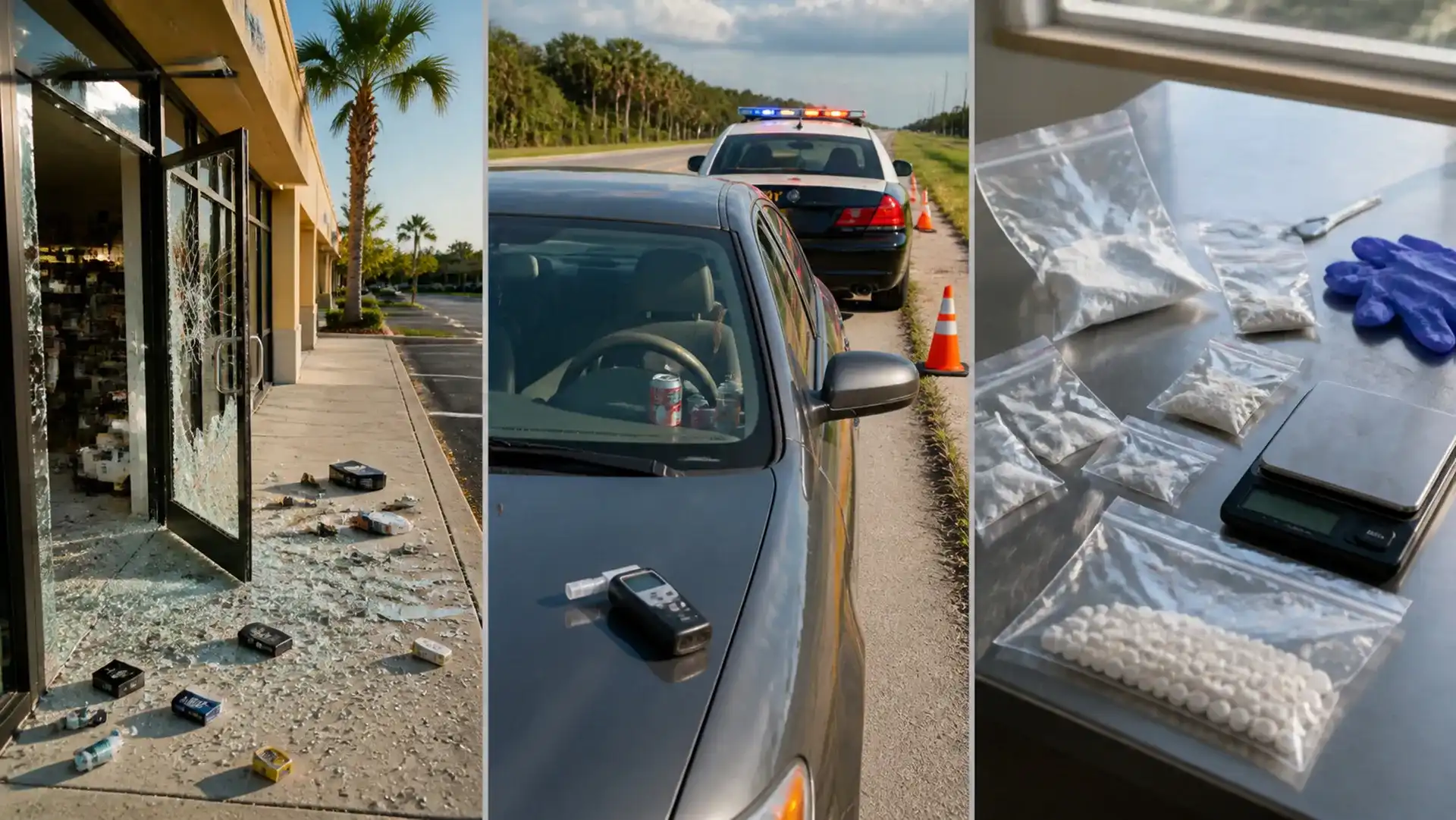
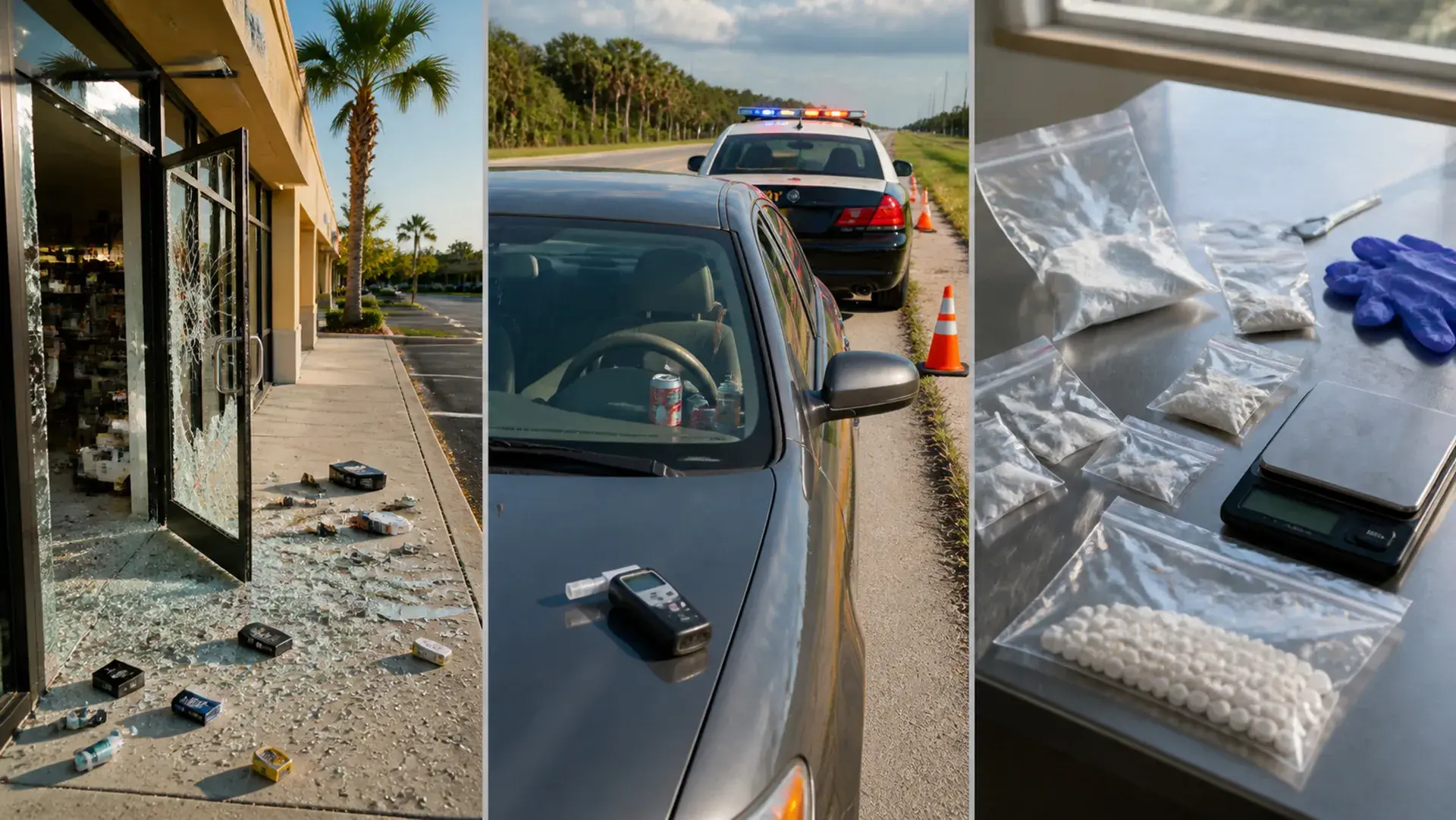

Quick Answer: Common Florida Crimes That May Require a Bail Bond
Property, DUI, drug, and violent-crime arrests can lead to questions about bail in Florida. A bond is not automatic: a judge, court schedule, hold, charge level, prior record, and release conditions can affect whether and when a bond may be available. A co-signer may have financial responsibilities and must help make sure the defendant follows every court requirement.
24-hour bail bond assistance in Central Florida
Call 352-343-6090 NowBeing arrested in Florida can leave a person and their family feeling scared, rushed, and unsure what to do next. Whether the arrest happens in Tavares, elsewhere in Lake County, or while someone is visiting Central Florida, the first questions are often about bail, jail release, and how to speak with a licensed bail bond agent.
Many arrests involve charges that may have a bond amount set, but bond availability, the amount, and release conditions depend on the charge, the court, prior history, and the facts of the individual case. A judge may require a first-appearance hearing before bond is set or posted, and some cases may involve a no-bond hold. Altman Bail Bonds can explain the surety-bond process and review available options for eligible cases.
A bail bond does not decide guilt or innocence, end a criminal case, or replace legal advice from a criminal defense attorney. It is a financial arrangement used to satisfy a court-set bail requirement when a defendant is eligible for release. The defendant still must attend every hearing and comply with all court-ordered conditions.
Common Florida Charges That May Require a Bail Bond
The following charge categories are common reasons people call a bail bondsman. The exact charge, bond amount, and release process vary widely. A misdemeanor may have a preset bond in some circumstances, while a felony, a probation-related hold, a domestic-violence allegation, or another serious matter may require a judge to review the case first.
Property crimes
Property-crime allegations can include theft, shoplifting, burglary, criminal mischief, fraud-related offenses, or damage to another person’s property. The seriousness of a property charge can depend on the alleged value of the property, the amount of alleged damage, whether there was entry into a structure, and other circumstances.
For example, an accusation involving a low-value item may be handled differently from an allegation involving a vehicle, a business, a weapon, or a large amount of property. Some property-crime arrests may have a bond amount available, while others may require a first appearance or come with conditions that must be addressed before release.
DUI and driving-related charges
A DUI arrest is a frequent reason families seek bail bond information in Central Florida. The process can be more complicated when the allegation includes a prior DUI, property damage, injury, a suspended license, leaving the scene, or another related charge. A person may also have conditions connected to driving privileges, alcohol use, testing, or contact with certain people.
Do not assume a DUI bond works the same way in every case. The jail, judge, charge details, and prior record can affect the next step. If someone is held after a DUI arrest, a licensed agent can help the family understand what information is needed to determine whether a surety bond may be an option.

Drug-related charges
Drug charges in Florida can range from allegations involving possession of a controlled substance or paraphernalia to more serious accusations involving sale, delivery, manufacturing, or trafficking. The charge level may depend on the substance, alleged quantity, location, prior history, and other facts reported in the case.
A person facing a drug-related charge should take court dates and release conditions seriously. Bond conditions may restrict travel, require check-ins, prohibit contact with certain people, or address other issues ordered by the court. Posting bail is only one part of the process; the defendant must continue to follow all conditions after leaving custody.
Violent Crime Allegations and Bond Reviews
Violent-crime allegations may include assault, battery, aggravated assault, robbery, domestic violence, sexual battery, or other offenses involving alleged force, threats, or injury. These cases can involve stricter release conditions, including no-contact orders, location restrictions, firearm restrictions, or an initial hearing before a bond decision is made.
Some charges may result in a no-bond status until the defendant appears before a judge. That does not mean a family should rely on assumptions or online estimates. The specific jail record, court order, and case facts control. When available, a bail bond agent can explain the information needed for a bond application and what the next step may be.
Posting a bond is not the end of the case. The defendant must attend court, follow all release conditions, and stay in communication with the co-signer and bail bond agent.
How a Florida Bail Bond May Work
When a court sets bail and a surety bond is available, a licensed bail bond agent may post a bond that guarantees the defendant’s appearance in court. The family or another qualified adult often acts as a co-signer, sometimes called an indemnitor. The co-signer signs an agreement and accepts important responsibilities.
Defendant responsibilities
The defendant must appear for every court date, comply with all written release conditions, provide accurate contact information, and promptly report changes of address or employment when required. Missing court can lead to a warrant, bond forfeiture proceedings, and additional consequences.

Co-signer responsibilities
A co-signer should read every document before signing. They may be responsible for the bond premium, remaining payment obligations, and financial losses if the defendant fails to appear or violates the bond agreement. Depending on the case, the agent may request collateral, additional co-signers, or financial documentation.
A no collateral bail bond may be available in qualifying cases, but it is not guaranteed. Eligibility can depend on the bond amount, charge, defendant history, co-signer information, and other underwriting factors. It is important to ask questions before agreeing to a payment plan or signing an indemnity agreement.
Information to have ready when you call
Having accurate information can make the conversation more productive. If available, be ready to share the defendant’s full legal name, date of birth, the jail or county involved, the alleged charge, booking number, bond amount, and the name of the person who may co-sign.
Bail Bond Help in Tavares and Central Florida
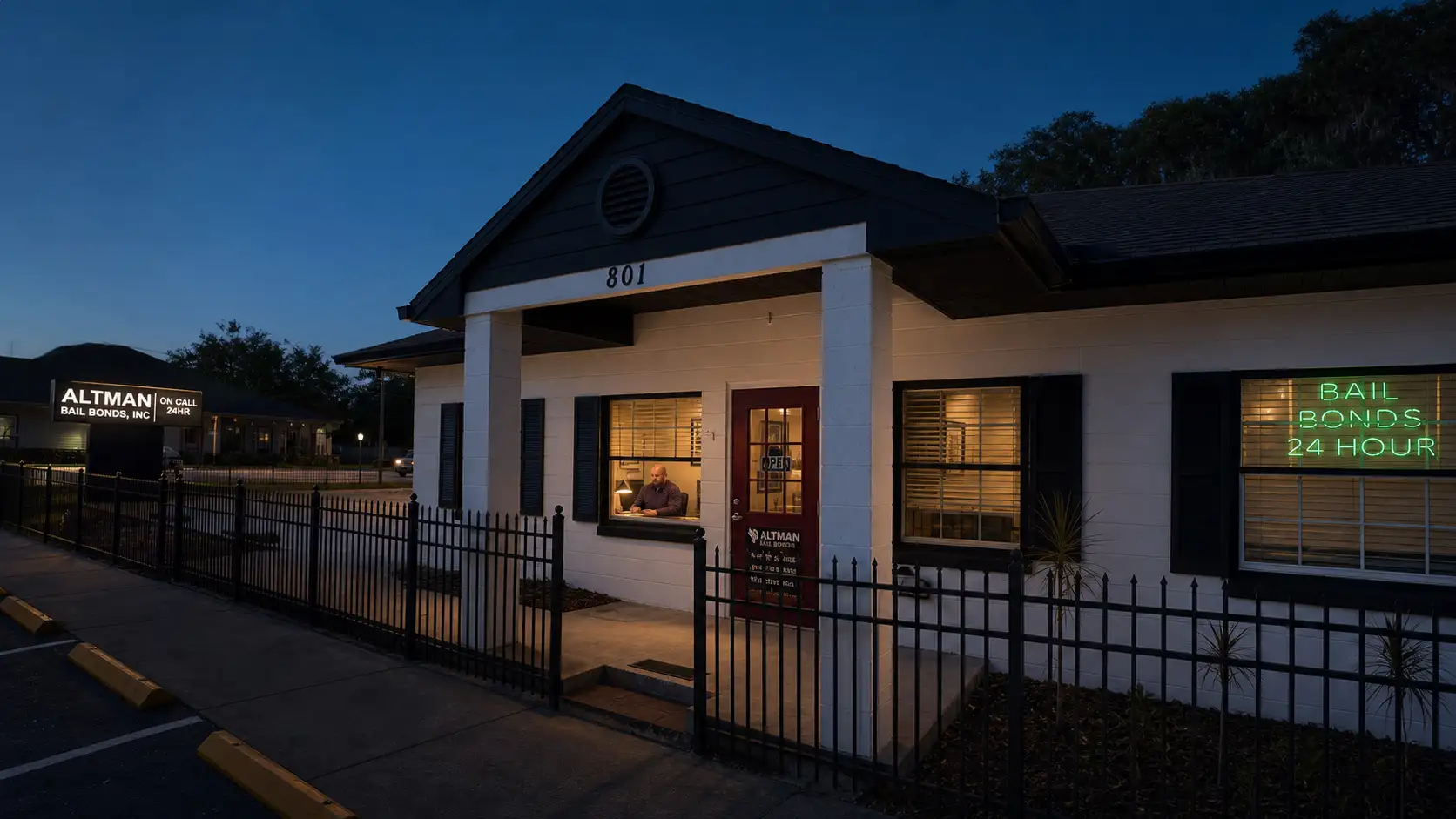
Altman Bail Bonds, Inc. serves people who need bail bond information in Tavares, Lake County, Clermont, Bushnell, and nearby Central Florida communities. The office is located at 801 W Main Street in Tavares, near the Lake County jail area. Calls are answered 24 hours a day for bond-related questions and case intake.
If a loved one has been arrested, start by confirming where they are being held and whether a bond has been set. You can then call Altman Bail Bonds at 352-343-6090 to discuss the available information. For more local guidance, visit the Lake County bail bonds page.
Florida Crimes Bail Bonds
Frequently Asked Questions
What common Florida charges may require a bail bond?
Common reasons people call a bail bondsman in Florida include property crimes, DUI and other driving-related charges, drug-related charges, and violent-crime allegations. The exact charge, bond amount, and release process vary. A misdemeanor may have a preset bond in some cases, while a felony, probation-related hold, domestic-violence allegation, or another serious matter may require a judge to review the case first.
Do property crime charges in Florida always have a preset bond?
No. Property-crime allegations may include theft, shoplifting, burglary, criminal mischief, fraud-related offenses, or damage to another person’s property. The alleged value, the amount of damage, whether someone allegedly entered a structure, and other case details can affect the charge and release process. Some arrests may have a bond amount available, while others may require a first appearance or court-ordered conditions before release.
Can a person get a bail bond after a DUI arrest in Florida?
A DUI arrest may qualify for a bond, but the process differs in every case. A prior DUI, property damage, injury, suspended license, leaving the scene, another related charge, the jail record, or a judge’s order can affect the next step. A licensed bail bond agent can review the available booking information and explain whether a surety bond may be an option.
Are drug-related charges eligible for a bail bond in Florida?
It depends on the specific charge and court order. Drug-related allegations may range from possession of a controlled substance or paraphernalia to accusations involving sale, delivery, manufacturing, or trafficking. The alleged substance, quantity, location, prior history, and other case facts can affect bond availability and conditions. A defendant must continue to follow every release condition after leaving custody.
Why might a violent crime allegation have a no-bond hold in Florida?
Violent-crime allegations can involve assault, battery, aggravated assault, robbery, domestic violence, sexual battery, or other allegations involving force, threats, or injury. Some cases require the defendant to appear before a judge before a bond decision is made. Release conditions may include no-contact orders, location restrictions, firearm restrictions, or other court requirements. The jail record, court order, and facts of the case control.
Does posting a bail bond end the criminal case?
No. Posting a bond only addresses release from custody while the case proceeds. The defendant must attend court, comply with all release conditions, and remain in communication with the co-signer and bail bond agent.