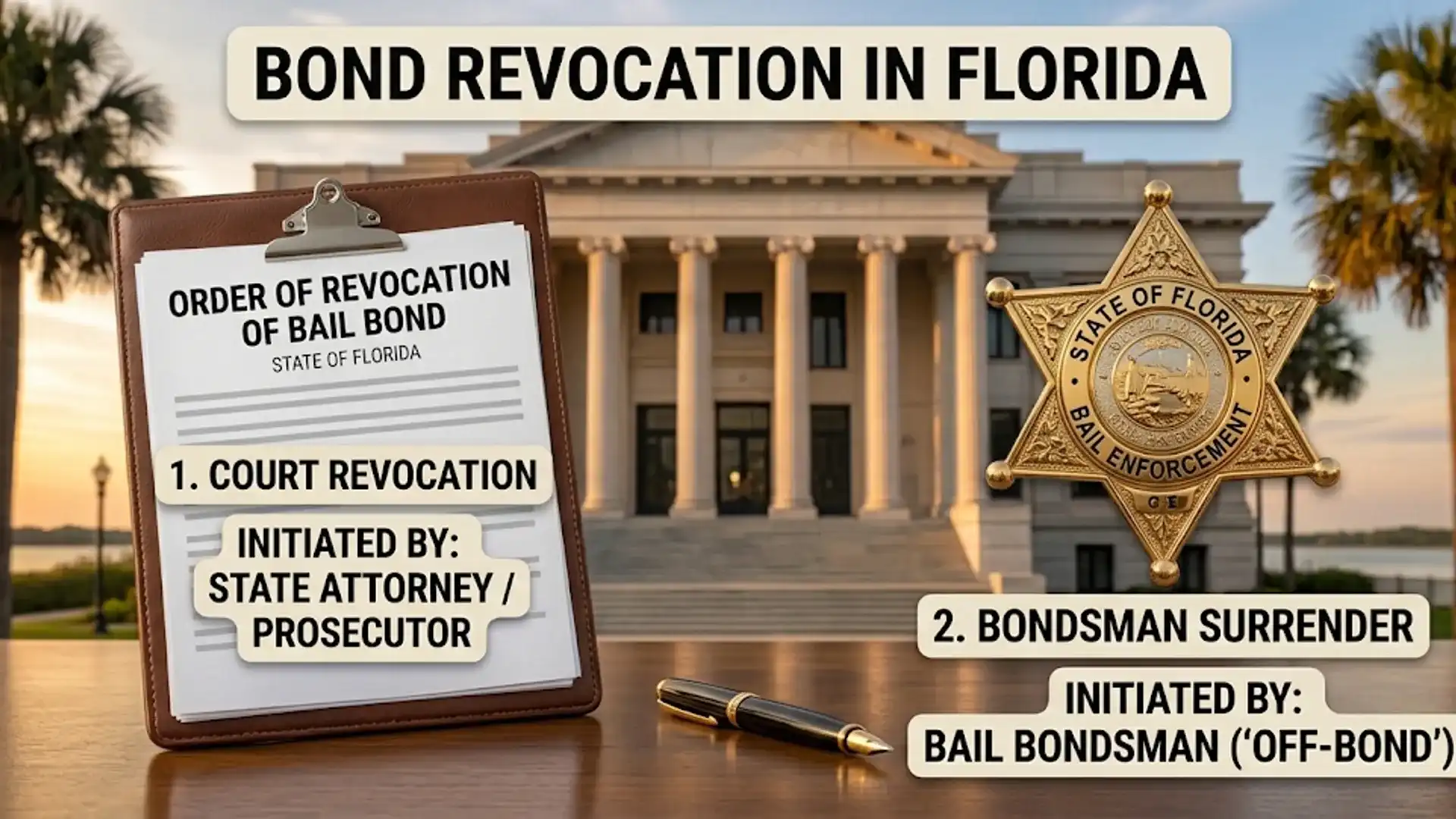

The bail bond process can become complicated quickly. While a defendant remains out on bond, certain actions or violations can lead the court to revoke bail and place that person’s freedom at risk.
A defendant’s bail may be revoked when the defendant commits a new crime while out on bond. The court may also consider a motion to revoke bond when the defendant fails to follow a judge’s order or violates the conditions of release. The State Attorney can file or present a motion asking the judge assigned to the case to revoke bail. This court process is separate from the bail bondsman’s decision to surrender a client.
If the judge revokes bond, the court may order a no bond status.
Law enforcement may then receive a warrant or court order to take the defendant into custody. The defendant may remain in jail unless the court later sets a new bond or otherwise changes the release conditions.
There are two different meanings people may intend when they use the phrase “revoke bond” in the bail bond system:
I. A bail bondsman may decide to go “off bond” or surrender a defendant. The bondsman may make that decision when the bondsman believes the client presents a flight risk or has failed to meet the terms of the bail bond agreement. For example, a client may fail to check in, provide inaccurate information, stop making required payments, or violate another agreement term.
When a bail bondsman arrests and surrenders the defendant to the jail, the bondsman does not add criminal charges and cannot prevent the defendant from seeking another bondsman if the court still allows bond. Bail professionals often call this an off bond, an endorsement of bond, or a surrender. In that situation, the original charges and original bond amount generally remain in place unless the court changes them.
II. The court can revoke a defendant’s bond after the State of Florida or the State Attorney asks the judge to do so. When the judge grants that request, the defendant’s bond status may become “no bond” or zero bond. Prosecutors commonly seek revocation after a defendant is accused of committing a new crime while out on bond or pretrial release. A judge reviews the information, holds a hearing when required, and decides whether to revoke release, modify release conditions, or allow the defendant to remain out on bond.
Florida pretrial-release conditions require defendants to avoid criminal activity and comply with court-ordered conditions. A material violation can expose the defendant to a revocation hearing and possible detention. Common issues that may lead to trouble include a new arrest, missing a court date, contacting a protected person in violation of a no-contact order, leaving an approved area, failing a drug or alcohol test, or ignoring other conditions imposed by the judge.
A revocation is not automatic in every situation. The judge evaluates the facts of the case, the alleged violation, the defendant’s history, public-safety concerns, and the likelihood that the defendant will comply with future court orders. Depending on the circumstances, the court may keep the existing bond, add stricter conditions, increase the bond, revoke bond, or order the defendant held without bond.
Both federal and state courts have procedures for revoking bail. In federal court, the Bail Reform Act of 1984 controls the process. If a defendant violates a release condition, the government may ask the court to revoke release. When the court finds probable cause that the defendant committed a crime while on release, the law creates a presumption that no release conditions will reasonably protect the community. The defendant has an opportunity to respond, but the judge ultimately decides whether to revoke bail, order detention, or impose new or additional conditions of release.
If you or a family member has questions about an off-bond surrender, a no-bond warrant, or a pending bond revocation issue, act promptly. A criminal-defense attorney can provide legal advice about the court case, hearings, and available legal options.
For bail bond information and help understanding the bail process in Lake County, contact Bail Bondsman Tim Altman at our Tavares bail bond agency.
Bail Bond Revoked FAQS
Altman Bail Bonds, Inc.
801 W Main St
Tavares, FL 32778
24 Hour Bail Bond Service
(352) 343-6090